
Feeling exhausted, unmotivated, disconnected, or overwhelmed can make it difficult to understand what is actually happening. You may assume that you are simply burned out from work or responsibilities, only to realize that the feelings are affecting areas of your life that have nothing to do with work.
Burnout and depression can share some symptoms, but they are not the same thing. Understanding the difference can help you recognize when it may be time to seek additional support.
What Is Burnout?
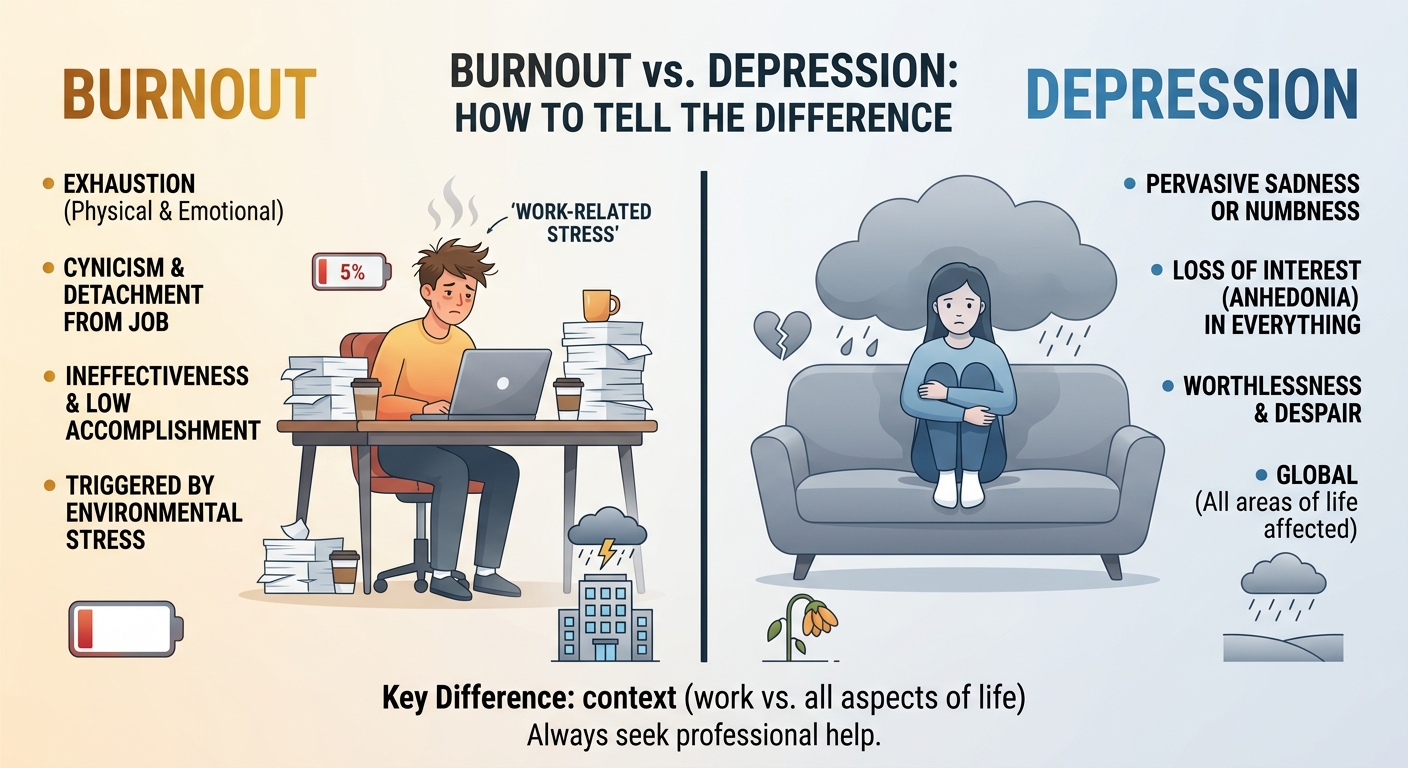
The World Health Organization defines burnout specifically in relation to chronic workplace stress that has not been successfully managed. It describes burnout through three main dimensions: exhaustion, increased mental distance or cynicism toward one’s job, and reduced professional effectiveness. The WHO also specifically classifies burnout as an occupational phenomenon rather than a medical condition.
This distinction is important because people sometimes use the word “burnout” to describe any period of emotional exhaustion. Feeling overwhelmed by family responsibilities, relationship problems, financial concerns, or other parts of life can certainly be stressful, but those experiences do not necessarily meet the WHO’s definition of occupational burnout.
Work-related burnout may look like dreading Monday morning, feeling increasingly detached from your job, having difficulty concentrating at work, or feeling as though you have nothing left to give by the end of the day.
What Is Depression?
Depression is a mental health condition that can affect mood, interest, energy, sleep, concentration, relationships, and everyday functioning. Symptoms can include persistent sadness or emptiness, loss of interest or pleasure, fatigue, changes in sleep or appetite, difficulty concentrating, feelings of worthlessness or hopelessness, and other emotional or physical symptoms. Unlike burnout, depression is not necessarily tied to one particular environment.
Someone may feel depressed at work, at home, on weekends, or during activities they previously enjoyed. The symptoms can affect multiple areas of life rather than remaining primarily connected to a specific job or workplace.
Why Can They Feel So Similar?
Burnout and depression can both involve exhaustion, difficulty concentrating, irritability, reduced motivation, sleep problems, and feeling emotionally drained. That overlap can make it tempting to conclude that you simply need a vacation or a few days away from work. Sometimes rest really does help. If the primary problem is work-related exhaustion, stepping away from the source of stress and making meaningful changes to your workload or environment may make a significant difference.
But if the symptoms continue when you are away from work or begin affecting other parts of your life, it may be worth looking more closely at what is happening.
Pay Attention to Where the Symptoms Show Up
One useful question is whether your symptoms are primarily connected to your work or whether they have spread across your life. If you feel relatively well when you are away from work but become exhausted, detached, or cynical when you return, workplace stress may be an important part of the picture.
If you continue to feel persistently low, disconnected, exhausted, or unable to enjoy things you normally enjoy regardless of where you are, depression or another mental health concern may need to be considered. This is not something you have to diagnose yourself. A mental health professional can help you look at the full picture rather than focusing on one symptom.
Rest Does Not Always Solve the Problem
Taking time away from work can be helpful, but a vacation cannot necessarily resolve the underlying issue. If your workload, workplace expectations, boundaries, or working conditions remain unchanged, the same stressors may be waiting when you return. And if what you are experiencing is depression rather than burnout, rest alone may not address the underlying condition. NIMH notes that depression treatment may include psychotherapy, medication, or both, depending on the person’s needs and circumstances.
Burnout and Depression Can Happen Together
It is also possible for someone to experience both significant work-related burnout and depression. For example, prolonged workplace stress may contribute to exhaustion and disengagement, while a depressive disorder can affect motivation, sleep, relationships, and interest in activities across a person’s life. That is one reason it can be difficult to determine what is happening based only on how tired or unmotivated you feel. If your symptoms are persistent or interfering with your ability to function, getting professional support can help you understand what may be contributing to them.
When Should You Consider Therapy?
You do not have to wait until you are completely overwhelmed before seeking help. Therapy can give you a place to examine what is happening, identify patterns, work through difficult emotions, and consider changes that may improve your overall well-being. NIMH notes that psychotherapy can help people develop coping and problem-solving strategies and address troubling emotions, thoughts, and behaviors. If depression may be part of what you are experiencing, depression therapy can provide support for symptoms such as low mood, loss of interest, emotional exhaustion, reduced motivation, and feelings of being stuck.
You Don’t Have to Figure Out the Label First
It is understandable to want a clear answer: “Am I burned out, or am I depressed?” But you do not necessarily have to determine the diagnosis yourself before reaching out for support.
A therapist can help you explore when your symptoms began, where they occur, what makes them better or worse, and how they are affecting your daily life. That broader context can be much more useful than trying to match yourself to a checklist. If work has become overwhelming, your interest in everyday life has changed, or you simply do not feel like yourself anymore, those experiences are worth taking seriously.
You Deserve Support Before You Reach Your Breaking Point
Burnout and depression can both leave you feeling as though you should simply push through. But continuing to push yourself when something is not working can make it harder to recognize what you actually need. Getting support does not mean that you have failed or that you cannot handle your responsibilities. It means you are taking your emotional well-being seriously. If you are struggling with exhaustion, low mood, anxiety, loss of motivation, or feeling disconnected from the things that normally matter to you, therapy can provide a space to understand what is happening and determine what support may be appropriate.
Ready to Take the Next Step?
North Star Therapy offers individualized support for people experiencing depression, anxiety, stress, life transitions, relationship concerns, and other challenges that can affect emotional well-being.
Explore individual therapy to learn more about how therapy may help.