
Money is one of those subjects that can influence nearly every part of daily life, even when people would rather not think about it. Paying bills, managing household expenses, saving for retirement, and preparing for unexpected costs are ordinary responsibilities, but they can become significant sources of emotional pressure when finances feel uncertain. For some people, financial concerns create occasional worry. For others, the stress becomes so persistent that it affects their sleep, relationships, concentration, and ability to enjoy everyday activities.
Financial stress is not limited to people who are struggling to make ends meet. Someone with a steady income and a relatively comfortable lifestyle may still experience anxiety about losing financial security, falling behind on savings, or being unprepared for an unexpected expense. The circumstances may differ, but the emotional experience can be similar.
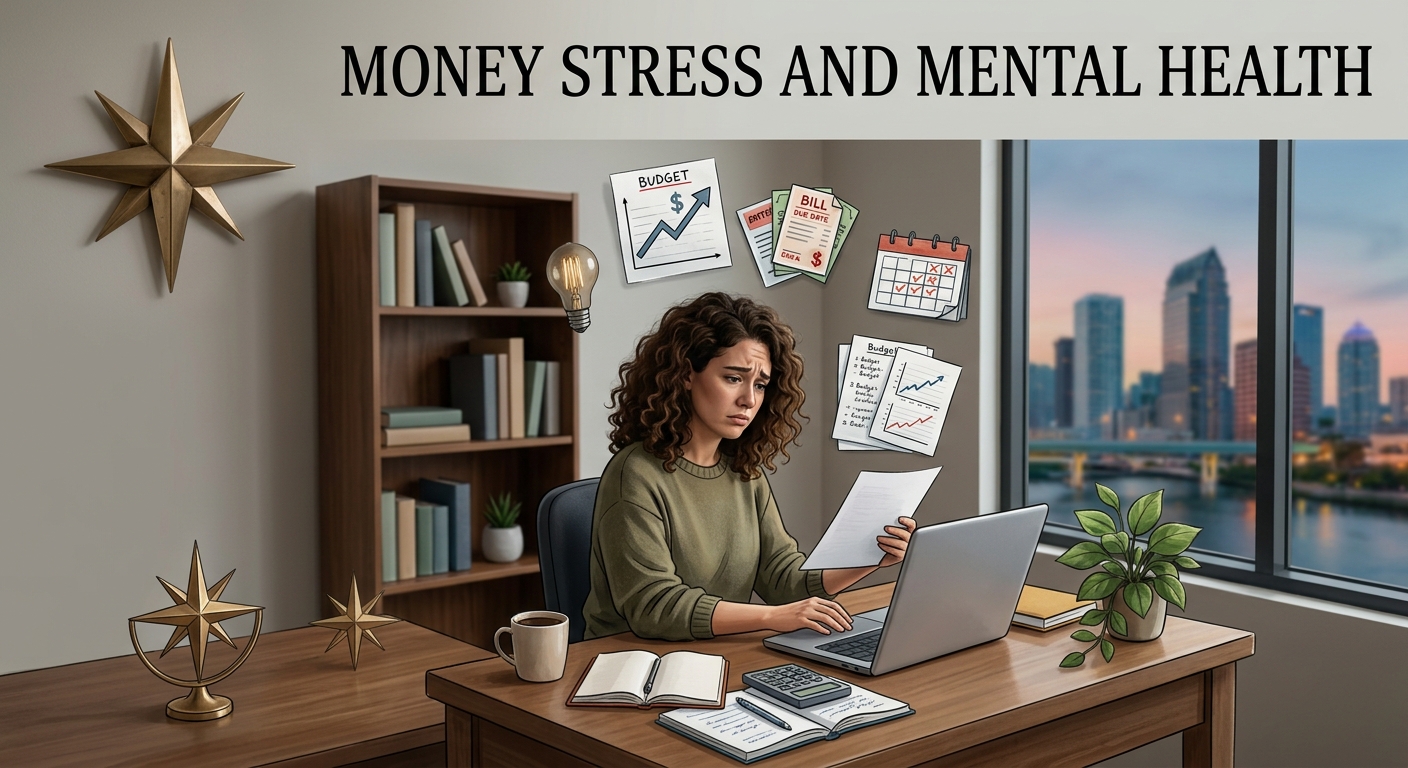
The connection between financial stress and mental health deserves attention because money concerns are not always resolved simply by creating a budget or reducing expenses. Sometimes the financial situation is only one part of a larger emotional challenge.
Why Money Creates So Much Emotional Pressure
Financial security is closely connected to a person’s sense of stability and independence. Money affects where people live, the opportunities available to them, their ability to care for family members, and their confidence about the future. When finances become uncertain, it can feel as though several areas of life are suddenly at risk.
The American Psychological Association’s 2026 Stress in America report found that 77% of adults identified the cost of living as a significant source of stress. The survey also found that 71% considered money itself a significant source of stress. These findings demonstrate how closely financial concerns are connected to the broader stress experienced by Americans. The APA’s 2026 report provides additional information about the economic and personal pressures affecting emotional well-being.
Financial uncertainty can also make people feel that they have lost control over their circumstances. Someone who is worried about paying monthly expenses may begin anticipating problems before they happen. They might repeatedly calculate what they can afford, worry about upcoming bills, or imagine what would happen if their employment or income changed.
Although planning can be helpful, repeatedly thinking about financial problems without reaching a practical solution can increase anxiety rather than reduce it.
How Financial Stress Affects Everyday Life
Financial pressure rarely remains confined to financial decisions. When someone is constantly worried about money, that concern can influence how they think, communicate, and respond to other people.
Financial Anxiety Can Interfere With Sleep
Many people find that their worries become more noticeable at night. During the day, work, family responsibilities, and other activities provide distractions. Once those responsibilities are finished, there may be more time to think about financial concerns.
Someone might lie awake calculating upcoming expenses, worrying about debt, or wondering whether they will have enough money for an important future purchase. Even when there is nothing they can do about the situation until the following morning, their minds may continue searching for answers.
Poor sleep can then make emotional regulation more difficult. A person who is already worried may become more irritable, less patient, and less able to concentrate after several nights of inadequate rest.
Money Problems Can Create Relationship Tension
Financial disagreements are common in relationships because partners do not always have the same experiences, priorities, or attitudes toward money.
One partner may feel more comfortable spending money on experiences, while the other prefers to save as much as possible. Someone who grew up in a financially unstable household may place a particularly high value on having emergency savings, whereas their partner may not share the same concerns.
When financial pressure increases, these differences can become more difficult to navigate. Conversations about household expenses may turn into arguments about responsibility, trust, or personal priorities.
The underlying disagreement is not always about a particular purchase. Sometimes it reflects different feelings about financial security and what each person needs to feel comfortable.
Financial Worries Can Affect Work Performance
Persistent financial concerns can occupy a considerable amount of mental attention. Someone who is worried about paying bills or supporting their family may find it difficult to concentrate on work-related responsibilities.
They may become distracted during meetings, have trouble making decisions, or spend more time checking financial information during the workday. Over time, the emotional strain can affect motivation and confidence.
Financial anxiety can also influence career decisions. Someone may remain in an unsatisfying position because they are afraid to risk changing jobs, or they may avoid pursuing an opportunity because they are concerned about the possibility of losing income.
The Cycle of Financial Anxiety and Avoidance
One particularly challenging aspect of financial stress is that anxiety can sometimes lead people to avoid the very situations they need to address.
For example, someone who is worried about credit card debt may avoid opening monthly statements because seeing the balance creates distress. Another person may postpone reviewing their bank account because they are afraid of discovering that they have less money than expected.
Avoidance may provide temporary emotional relief, but it does not resolve the underlying concern. In some situations, it can make the problem more difficult to manage because important information or decisions are delayed.
Financial anxiety can also lead to excessive checking. Someone may repeatedly review their account balance, calculate expenses, or search for reassurance that their financial situation is secure. Even when the numbers have not changed, checking may briefly reduce anxiety before the worry returns.
Recognizing these patterns can help people understand why financial concerns sometimes remain emotionally overwhelming even when they are taking reasonable steps to manage their finances.
How to Manage the Emotional Effects of Money Stress
Addressing financial stress often requires both practical planning and emotional support. Creating a realistic budget, reviewing expenses, and speaking with a qualified financial professional can help people understand their financial options. However, these steps may not completely resolve the anxiety associated with uncertainty or previous financial experiences.
It can be helpful to begin by identifying exactly what is causing the most distress. Someone who is worried about debt may need a different approach from someone who has adequate savings but experiences persistent fear about losing financial security.
Setting aside a specific time to review financial matters can also prevent money concerns from occupying the entire day. Rather than repeatedly checking accounts or calculating expenses, people can establish a regular schedule for reviewing their finances and making necessary decisions.
It is equally important to maintain activities and relationships that provide enjoyment and emotional support. Financial concerns may require attention, but they do not have to become the only focus of everyday life.
People should also recognize that financial difficulties do not determine their personal worth. Experiencing debt, losing employment, or struggling with rising expenses does not mean someone has failed as a person.
When Should You Consider Therapy?
Financial stress does not automatically indicate an anxiety disorder. It is understandable to feel worried when expenses increase, income becomes uncertain, or an unexpected financial problem develops.
However, professional support may be beneficial when money worries become persistent and begin interfering with sleep, relationships, concentration, or daily responsibilities.
Therapy can help individuals explore the emotional patterns associated with financial anxiety, including fear, shame, perfectionism, avoidance, and the need to maintain control. It can also help people recognize how previous experiences may influence their current reactions to money.
For couples, therapy may provide an opportunity to discuss financial disagreements in a more constructive environment. Understanding each other’s concerns and communication patterns can make difficult conversations easier to navigate.
At North Star Therapy, individual therapy in Tampa provides support for adults navigating anxiety, stress, relationship concerns, and other emotional challenges. In-person appointments are available in Tampa, with virtual therapy throughout Florida.
Financial circumstances are not always within a person’s control. However, learning to manage the emotional effects of financial pressure can help make difficult situations more manageable.