
A phone can make life easier in countless ways.
It helps us communicate, navigate unfamiliar places, manage schedules, work remotely, access information, and stay connected with people we care about.
But constant access can also create constant pressure.
Many people wake up and immediately check notifications. They respond to messages while eating, scroll during breaks, answer emails after work, and keep their phones nearby while trying to sleep.
Even when there is nothing urgent happening, the mind may remain alert.
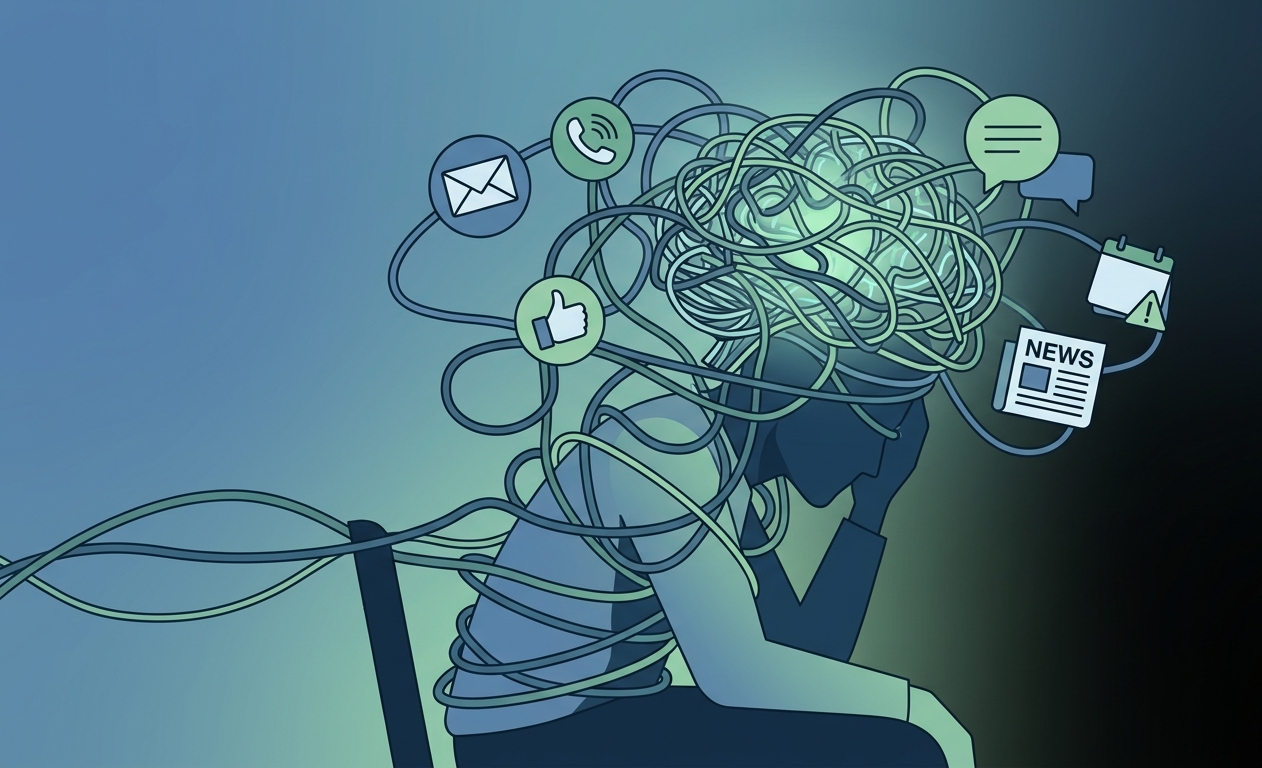
This is one reason digital overload and mental health have become increasingly important topics. Being connected all the time can make it difficult to feel fully present, mentally settled, or genuinely off duty.
What Is Digital Overload?
Digital overload occurs when the amount of information, communication, notifications, and screen-based activity becomes mentally or emotionally overwhelming.
It does not necessarily mean that someone spends an unusually high number of hours on a device. A person may experience digital overload because of the intensity of their digital environment.
For example:
- Work messages continue after business hours.
- Multiple group chats require constant attention.
- Notifications interrupt tasks throughout the day.
- News updates create a sense of ongoing urgency.
- Social media encourages comparison.
- People feel pressure to respond immediately.
- Online content makes it difficult to stop scrolling.
The problem is not simply the screen. It is the feeling that your attention is always available to someone or something else.
Why Constant Connection Can Feel Exhausting
The brain needs opportunities to focus, process experiences, and rest.
When attention is repeatedly interrupted, it may become harder to concentrate. Even a quick glance at a notification can pull the mind away from the task at hand.
Over time, people may feel mentally scattered.
They may say:
- “I cannot focus anymore.”
- “My brain feels full.”
- “I am tired, but I cannot relax.”
- “I keep checking my phone without thinking.”
- “I feel like I am always behind.”
- “Even when I am resting, I am still mentally working.”
Digital overload may contribute to emotional fatigue because the mind is constantly shifting between information, conversations, responsibilities, and expectations.
The Pressure to Respond Immediately
Many people feel that quick responses are expected.
A delayed reply may lead someone to worry:
“Did I upset them?”
“Do they think I am ignoring them?”
“Should I answer even though I am busy?”
This can create an unspoken expectation of constant availability.
However, being reachable does not mean you must be available at every moment.
Healthy relationships generally allow room for work, rest, sleep, personal time, and focused attention.
Setting boundaries around communication is not necessarily rude. It can be part of protecting mental energy.
Digital Overload Can Affect Sleep
Many people use their phones shortly before bed.
Sometimes this begins as a way to relax. A person may plan to watch one video or check one message but continue scrolling longer than expected.
Late-night digital activity may affect sleep in several ways:
- Interesting or emotional content keeps the mind active.
- News may increase worry.
- Social comparison may trigger insecurity.
- Work messages may reactivate stress.
- Notifications may interrupt the process of winding down.
A calmer bedtime routine may help create a clearer transition between the demands of the day and sleep.
Consider charging your phone outside the bedroom, silencing nonessential notifications, or creating a period of time before bed without social media or work communication.
The Emotional Effects of Endless Information
The internet provides access to more information than any person can realistically process.
News, social media, videos, podcasts, advertisements, and messages compete for attention throughout the day.
Some information is useful. Some is entertaining. Some is emotionally difficult.
Constant exposure to upsetting news may create feelings of helplessness, fear, anger, or emotional numbness. People may continue scrolling because they want to stay informed, even when the information is increasing distress.
Taking breaks from the news does not mean ignoring the world. It may mean recognizing that you can care about important issues without consuming updates continuously.
When Digital Connection Affects Relationships
Technology can help people maintain relationships, but it can also divide attention.
A person may be physically present while mentally focused on a screen.
This can affect:
- Family meals
- Conversations with a partner
- Time with children
- Social gatherings
- Shared activities
People may begin to feel that they are competing with a device for attention.
For couples, technology can also create misunderstandings. One partner may expect immediate responses while the other needs more space. Online activity may lead to jealousy, secrecy, or conflict.
If technology is contributing to relationship tension, couples therapy in Tampa can provide a supportive environment for partners to discuss expectations, boundaries, communication, and emotional needs.
Signs You May Be Experiencing Digital Overload
Digital habits may be affecting your mental well-being if you notice:
- Difficulty concentrating
- Feeling anxious when you cannot check your phone
- Repeatedly checking notifications without a clear reason
- Trouble relaxing without a screen
- Feeling mentally exhausted after scrolling
- Losing track of time online
- Staying up later than intended
- Comparing yourself to others frequently
- Feeling pressure to respond immediately
- Becoming irritated when interrupted digitally
- Neglecting activities or relationships you value
These signs do not automatically mean that technology is causing a mental health condition. They may indicate that your current habits are not giving your mind enough time to recover.
How to Create Healthier Digital Boundaries
The goal does not have to be eliminating technology. Most people need digital tools for work, communication, and daily life.
The goal is to use technology more intentionally.
Turn Off Nonessential Notifications
Not every app needs immediate access to your attention.
Consider keeping notifications for calls or important messages while silencing alerts from shopping apps, social media platforms, or other nonessential sources.
Create Phone-Free Times
Choose a few regular periods when your phone is not the focus.
Examples may include:
- The first 30 minutes after waking
- Meals
- Conversations with loved ones
- The hour before bed
- A walk outside
Small, consistent boundaries may be easier to maintain than an extreme digital detox.
Separate Work and Personal Time
If possible, establish a clear end to the workday.
Turn off work notifications, close the laptop, or place work devices out of sight.
For people who work remotely, a physical transition, such as changing clothes, taking a walk, or leaving the workspace—may help signal that work has ended.
Replace Passive Scrolling with Something Restorative
When you feel the urge to scroll, ask what you actually need.
You may need:
- Rest
- Entertainment
- Connection
- Reassurance
- A break from responsibility
- A change of environment
Sometimes a phone provides temporary distraction but does not meet the underlying need.
You Do Not Have to Be Available All the Time
Many people worry that setting boundaries will make them seem distant or unreliable.
However, constant availability is not the same as healthy communication.
You can care about people and still respond later.
You can be committed to your work and still protect your personal time.
You can use technology and still choose moments without it.
Rest is not something you have to earn after responding to every message.
When Digital Overload Is Connected to Anxiety
Some people check their phones repeatedly because they are worried about missing something important.
Others seek reassurance through messages or social media. They may feel temporary relief after checking but quickly become anxious again.
This cycle can be difficult to break.
If digital habits are connected to persistent worry, overthinking, sleep problems, or difficulty relaxing, anxiety therapy in Tampa may help you understand the patterns involved and develop coping strategies that fit your life.
Finding Balance in a Connected World
Technology is not going away, and it does not have to be the enemy.
The goal is not to reject digital connection. It is to create enough space for focus, rest, relationships, and real-world experiences.
Ask yourself:
- When does technology help me?
- When does it leave me feeling worse?
- What am I hoping to get when I reach for my phone?
- Do I have enough time without digital demands?
- What would help me feel more mentally present?
At North Star Therapy, we support people throughout Tampa who are navigating anxiety, stress, relationship concerns, emotional exhaustion, and life changes.
If you feel constantly connected but rarely at rest, therapy can offer a space where you do not have to respond immediately, perform for an audience, or divide your attention.
You can slow down, explore what is affecting you, and focus on what you need.
You do not have to be reachable every moment to be connected to what matters.