
Mental health awareness has improved significantly over the years, yet many harmful misconceptions still exist. Mental illness myths can create stigma, prevent people from seeking help, and cause individuals to feel ashamed of their emotional struggles.
Millions of people experience anxiety, depression, bipolar disorder, trauma, and other mental health conditions every year. In growing communities like Tampa Bay, mental health concerns affect people of all ages, professions, and backgrounds. Understanding the truth behind mental illness myths can help create more supportive conversations and encourage people to seek treatment when needed.
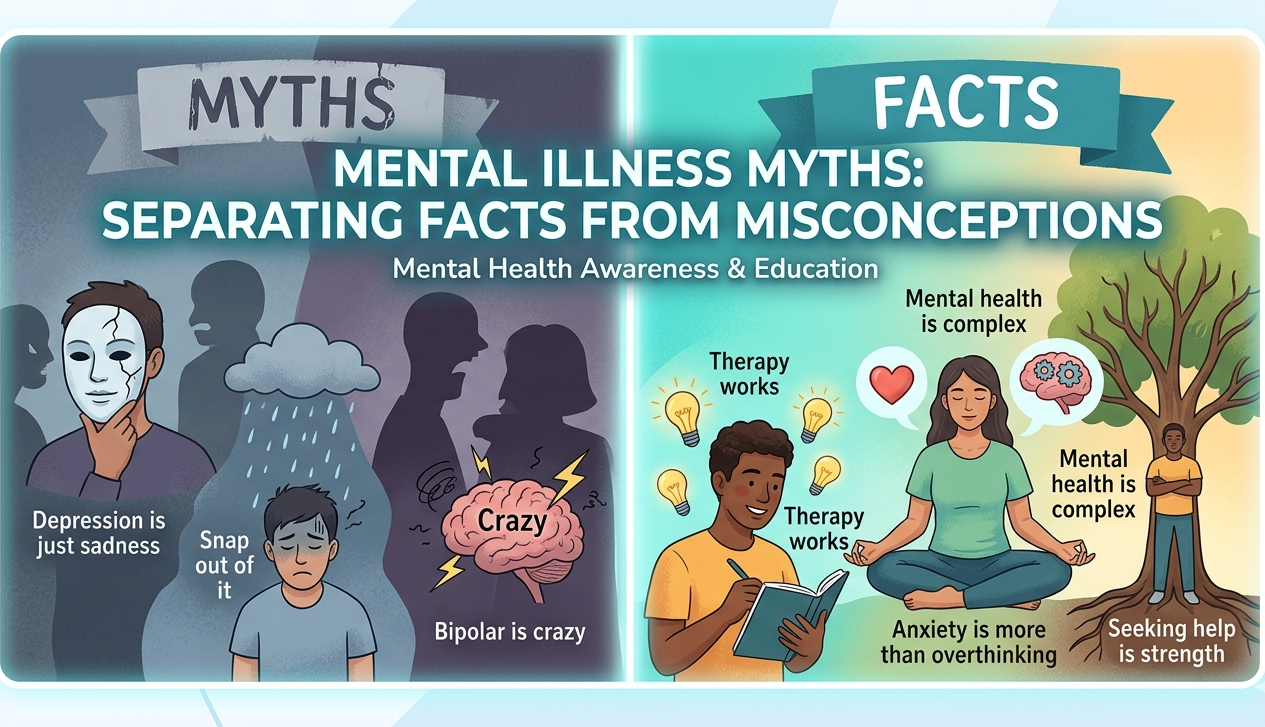
Why Mental Illness Myths Are Harmful
Many people avoid therapy or emotional support because they fear judgment from others. Misunderstandings about mental health can make individuals feel isolated, embarrassed, or weak for struggling emotionally.
Mental illness myths can:
- Increase stigma
- Discourage treatment
- Create shame
- Spread misinformation
- Prevent supportive conversations
Replacing myths with accurate information helps normalize mental health care and encourages compassion.
Mental Illness Myths About Depression
Myth: Depression Is Just Sadness
One of the most common mental illness myths is that depression simply means feeling sad.
In reality, depression can affect:
- Energy levels
- Sleep
- Appetite
- Concentration
- Motivation
- Physical health
- Relationships
Some individuals with depression continue functioning outwardly while struggling internally. They may still work, parent, socialize, and meet responsibilities while experiencing significant emotional pain.
Myth: People With Depression Should Just “Snap Out of It”
Depression is not something someone can simply turn off through willpower.
Comments such as:
- “Just think positive”
- “Everyone gets stressed”
- “Try harder”
can unintentionally increase shame and guilt.
Professional therapy, lifestyle changes, support systems, and sometimes medication may all play important roles in recovery.
Mental Illness Myths About Anxiety
Myth: Anxiety Is Just Overthinking
Anxiety disorders involve much more than occasional stress or worry.
People with anxiety may experience:
- Panic attacks
- Racing thoughts
- Restlessness
- Muscle tension
- Difficulty sleeping
- Rapid heartbeat
- Avoidance behaviors
In fast-paced areas like Tampa, chronic stress and burnout can sometimes worsen anxiety symptoms if left untreated.
Myth: Avoiding Stress Completely Will Cure Anxiety
While reducing stress can help, anxiety disorders often require deeper emotional work and coping strategies. Therapy can help individuals better understand triggers, thought patterns, and emotional responses.
Mental Illness Myths About Bipolar Disorder
Myth: Bipolar Disorder Means Someone Is “Crazy”
This is one of the most damaging mental illness myths surrounding bipolar disorder.
Bipolar disorder is a treatable mental health condition involving shifts in mood, energy, and activity levels. Symptoms can vary greatly from person to person.
Many people with bipolar disorder successfully manage symptoms with:
- Therapy
- Medication
- Lifestyle support
- Emotional regulation skills
- Ongoing treatment
Myth: People With Bipolar Disorder Are Violent
Most individuals living with bipolar disorder are not violent. Media portrayals often exaggerate mental health conditions and contribute to fear-based stereotypes.
Mental Illness Myths About Therapy
Myth: Therapy Is Only for Serious Problems
Therapy is not only for crisis situations.
People seek therapy for many reasons, including:
- Anxiety
- Stress management
- Burnout
- Relationship issues
- Career pressure
- Trauma
- Grief
- Self-esteem
- Life transitions
Many individuals in Tampa seek therapy proactively to improve emotional wellness and develop healthier coping strategies.
Myth: Seeking Help Means You Are Weak
Asking for help requires self-awareness and courage. Mental health conditions are influenced by many factors, including genetics, trauma, stress, environment, and brain chemistry.
Seeking support is a sign of strength, not weakness.
Reducing Stigma Around Mental Health
Reducing stigma starts with education and compassionate conversations.
Ways to challenge mental illness myths include:
- Speaking openly about mental health
- Avoiding judgmental language
- Encouraging therapy
- Listening without criticism
- Learning about emotional wellness
The more informed communities become, the easier it is for individuals to seek support without fear or shame. The National Institute of Mental Health (NIMH) provides evidence-based information about anxiety, depression, bipolar disorder, and other mental health conditions.
Mental illness myths continue to create unnecessary stigma and misunderstanding around emotional health. Replacing myths with facts helps create more compassionate communities where people feel supported instead of judged.
If you or someone you love is struggling with anxiety, depression, bipolar disorder, trauma, or emotional overwhelm, professional therapy can help.